9+ Alternatives to Fosamax for Osteopenia and Osteoporosis (Drugs and Non-Pharmacological Options)

Fosamax (alendronate) has for decades been one of the most commonly prescribed drugs for osteoporosis. For many women post-menopause, it’s typically the first treatment doctors will give you if your DEXA scan indicates osteoporosis is present.
However, studies repeatedly show that over half of women stop taking Fosamax within the first year.¹,² As such, if you’re looking for an alternative to Fosamax, you’re not alone.
If you’re researching different treatment options for low bone density, it’s likely to be for one of these reasons:
- The side effects of Fosamax can be difficult.
Nausea and irritation of the esophagus are common side effects, causing many women to discontinue the treatment.
To reduce the chance of side effects, there’s a strict protocol to follow when taking the drug. You’ll need to take it first thing in the morning with a glass of water, and then stand upright for 30 minutes. Even with this, side effects are still common.
- The risks of long-term impacts can understandably cause worry.
With extended use of Fosamax, you increase the rare risk of femur fractures and osteonecrosis—a serious, painful condition in the jaw.³
As a result, you’re recommended to take a drug holiday after five years of use. But there are often few options for what happens next.⁴
- Fosamax isn’t usually an option for osteopenia.
Fosamax, like most other medications for low bone density, is typically only prescribed if you’re diagnosed with osteoporosis (i.e., if you have a T-score of 2.5 or lower).
If you have osteopenia, you may be prescribed medication if you have a high risk of fracture (measured using the FRAX score). However, the vast majority of women with osteopenia do not take prescription drugs.
Instead, you’re more likely to be told to make do with exercise and diet changes alone, which can be frustrating to hear if you’re concerned about the state of your bone health.
In this guide, we cover the full landscape of Fosamax alternatives. We’ll share other drugs that can be prescribed if you don’t tolerate Fosamax, and we’ll cover non-drug alternatives too.
We’ll kick off this article by introducing you to Osteoboost. It’s the only non-pharmacological medical device that’s cleared by the FDA for the treatment of osteopenia, the precursor to osteoporosis.
While it isn’t indicated for patients with osteoporosis, it has a strong evidence base to support treatment for post-menopausal osteopenia. In a clinical trial, over 80% of participants showed a reduction in bone density loss when using Osteoboost at least three times per week.
Want a way to treat osteopenia and protect your bone health? Order the Osteoboost device today.
Osteoboost: The only FDA-cleared non-pharmacological treatment for osteopenia
Most articles that outline alternatives to Fosamax essentially limit themselves to other pharmacological options. But if you’re not seeing the non-drug alternatives, you’re missing out on safe and effective ways to manage your bone health.
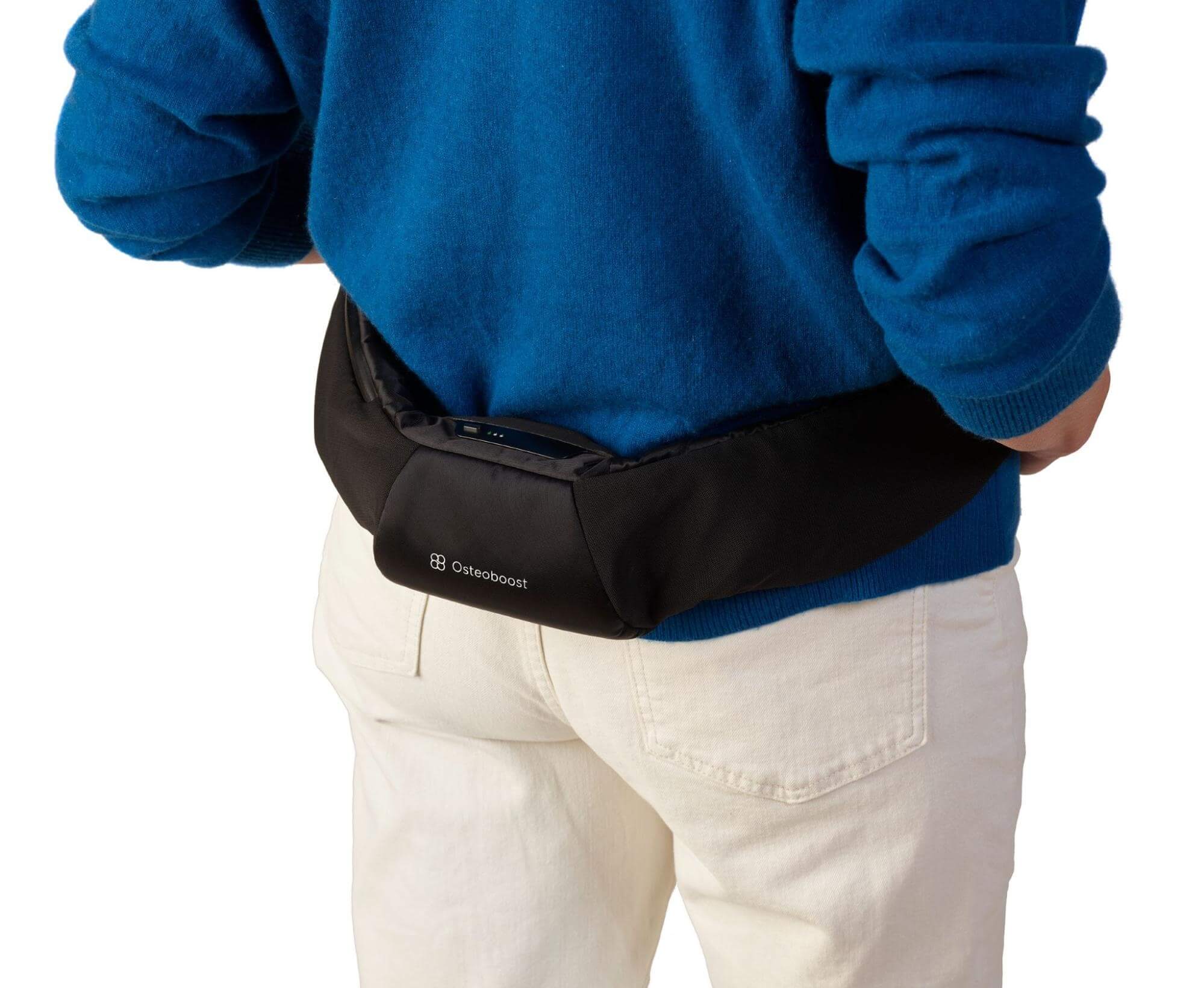
For instance, Osteoboost is a wearable vibration device that has been shown to reduce bone density loss in the spine by 85% in patients with postmenopausal osteopenia who used the device at least three times per week. As a result, it’s the only non-pharmacological device to be cleared via the FDA’s De Novo pathway for the treatment of low bone density.
Osteoboost is a medical device built into a belt that you wear around your hips for 30 minutes a day. While you wear it, the device delivers gentle vibration to your lumbar spine and hips, the areas that are most vulnerable to fracture.
It’s a particularly useful non-pharmacological alternative to Fosamax if you:
- Have osteopenia and can’t yet access a prescription for Fosamax
- Prefer a natural treatment that doesn’t have the side effects of medication
- Want to supplement and reinforce other treatments for bone health.
Osteoboost has been proven to be an effective treatment for osteopenia in peer-reviewed research. In a randomized, controlled trial at the University of Nebraska Medical Center, the device reduced bone density loss in the spine by 85% and reduced bone strength loss by 83% compared to placebo, over 12 months in patients who used the device at least three times per week.
Some research participants even saw bone growth. 31% had an increase in bone strength in the spine and 33% had an increase in bone density in the spine.
One of the most important benefits of Osteoboost versus medications like Fosamax is that there have been no reported serious adverse events. There are no gastrointestinal side effects, no long-term increase in fracture risk, and no need for any strict dosing protocol.
Instead, with Osteoboost, you can wear the device and go about your normal daily activities.
How Osteoboost works to treat low bone density
Previously, one of the only non-pharmacological treatments for low bone density was exercise. If your T-score was not low enough to be prescribed Fosamax, exercise is what doctors would recommend.
But this approach alone has always had its limitations for bone strength. For one thing, not everyone after menopause feels comfortable with exercising regularly. In our State of Bones 2026 report, we found that many people with low bone density are particularly concerned about physical activity due to a fear of fracture.
Osteoboost works by replicating the effects of high-impact exercise. By delivering low-intensity vibration, Osteoboost mechanically stimulates osteoblast activity—i.e., your body’s bone-forming cells—in the same way that exercise would.
In fact, independent studies have repeatedly shown that mechanical vibrations produce key markers of bone formation, including COX-2, nitrous oxide, osteocalcin, PGE-2, RANKL, ALP, and type 1 collagen.⁵,⁶
As such, by replicating the bone-forming mechanism of exercise, Osteoboost provides a non-intrusive, easy, and proven way to increase your bone health.
Note: We recommend using Osteoboost as part of a wider healthy lifestyle that includes exercise and other interventions suggested by your provider. Even if you can manage only a small amount of exercise each day, your bones will be stronger for it—and you will be healthier overall.
How to use Osteoboost
You must have a prescription before receiving and using Osteoboost, but getting one is simple. You can download this form to share with your doctor, ask them to prescribe it through their EMR, or request a prescription online via Beluga Health, our telehealth partner.
Once you’ve received a prescription and placed your order, you’ll receive the Osteoboost device from our fulfillment pharmacy along with a downloadable app that you can use to track your usage and calcium intake.
The first thing you’ll need to do is to try on the device and ensure it fits comfortably:
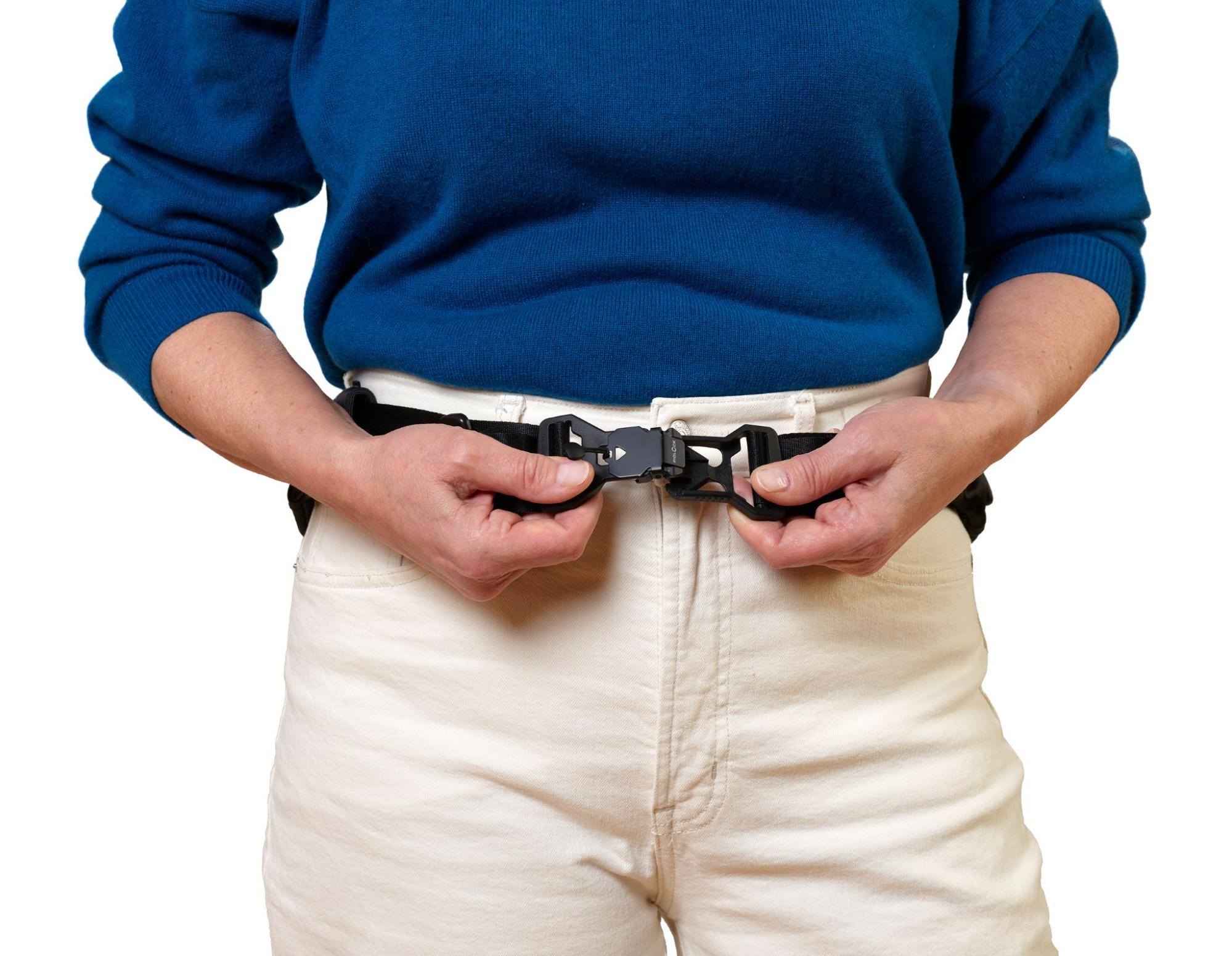
- Position the belt around your hips, with the vibration pack on your sacrum and the power button facing up
- Secure the device with the clasp and tighten the straps. You can check the app to confirm that the belt is tight enough
- Stand still for the device to perform a pressure check (it takes about 5 seconds).
Once fitted, you’ll feel a vibration pulse, which means the device is calibrating. Once calibration is complete, the device will start continuously vibrating, and it’ll be ready to use.
Order Osteoboost, the non-drug alternative to Fosamax for osteopenia
The side effects of medication for osteoporosis can be unpleasant and debilitating. That’s why many women struggle to adhere to the treatment long-term.
Luckily, these days, Fosamax is not the only option for treatment of low bone density. If you have post-menopausal osteopenia, you may not need medication at all.
Osteoboost is the only non-drug treatment for low bone density. Cleared via the FDA’s De Novo pathway, it’s been shown to reduce the loss of bone density by 85% in postmenopausal women with osteopenia.
Ready to try a different way to manage your low bone density, without side effects? Order your Osteoboost device today.
Pharmacological alternatives to Fosamax: 3 options
If you’re looking for drug alternatives to Fosamax to treat osteoporosis, you have three main options:
- Other bisphosphonates (i.e., the same class of drugs as Fosamax)
- Hormone replacement therapy
- Different drug classes, such as denosumab or raloxifene
Each has its own strengths, weaknesses, and risk profiles. Before you take any, you’ll need a prescription—and you’ll want to talk your options through with a doctor.
Other bisphosphonates
Bisphosphonates, such as alendronate (Fosamax), risedronate, and ibandronate, work by slowing down your bone breakdown.
In everyday life, your body is continuously remodeling bone, with specialized cells called osteoclasts breaking down old bone and osteoblasts building new bone. Bisphosphonates act on the osteoclasts to stop them from resorbing bone, slowing down the process.
The trouble is that the drug itself tends to be quite caustic, meaning it causes irritation to your tissue. If you’re taking it orally, as you do with Fosamax, it comes into contact with your throat and stomach lining, where it can cause severe discomfort.
Among the bisphosphonates, there’s some evidence that Fosamax is particularly difficult to tolerate.⁷ If you don’t tolerate it well, an alternative can be a good choice:
- Actonel (risedronate): This works using the same mechanism as Fosamax, but there’s some evidence that it has better tolerability, particularly relating to gastrointestinal issues.⁸ If you’re prescribed Actonel, you’ll take it weekly or monthly.
- Boniva (ibandronate): Boniva works in a similar way, but you can take it either via a monthly oral tablet or an intravenous infusion every quarter. If you’ve suffered from side effects in the past, the IV method may be preferable.
The downside is that the evidence base is a little weaker than Fosamax. While evidence is strong for Boniva’s efficacy for spinal bone density, there’s less support for its impact on the risk of hip fractures.⁹
- Reclast (zoledronic acid): A final option in the family of bisphosphonates is typically taken as an annual IV infusion. It may be a good choice if you simply can’t tolerate the oral delivery of bisphosphonates.
Alternative bisphosphonates can be worth considering if you’re struggling with the side effects of oral Fosamax dosing.
However, switching to another of these drugs won’t reduce the long-term fracture risk, nor the eventual need for a drug holiday. If these are concerns, you’ll need a different medication entirely.
Hormone replacement therapy (HRT)
Estrogen decline after menopause is the primary driver of bone density loss in post-menopausal women. Estrogen typically slows osteoclasts (just like bisphosphonates), and when this hormone declines, these cells that break down bone become more active.
Hormone replacement therapy (HRT) acts to address the root cause of bone density loss: the loss of estrogen in the first place. The therapy restores that hormone and puts the brake on bone breakdown.
HRT also has the benefit of helping with other aspects of menopause, such as hot flashes, night sweats, mood changes, sleep disruption, vaginal dryness, and reduced libido. That’s why it’s most commonly prescribed as a medication to help you manage the changes your body goes through during menopause.
While the evidence for its effectiveness for treating low bone density is strong, it’s less robust than for bisphosphonates generally.¹⁰,¹¹
Plus, there is a consideration to be made about the risks of HRT. For instance, the link between HRT and breast cancer has been much discussed, and the risks here depend on the timing and duration of treatment.¹²
However, if you have a history of cancer and you’re far past menopause, it might not be a good fit. It’s critical to work with your provider as you discuss hormonal therapies and create an individualized strategy that is optimal for you.
Other drug classes
Besides bisphosphonates and HRT, there’s a range of other medications that are prescribed for low bone density:
- Prolia (denosumab): The drug typically sold as Prolia works with a different mechanism than bisphosphonates. Rather than suppressing the behavior of osteoclasts, denosumab inhibits the protein that activates those cells in the first place.
Prolia is administered via a twice-yearly injection, so it avoids the gastrointestinal side effects associated with bisphosphonates. It also doesn’t carry the risks of atypical fractures that come with bisphosphonates.
However, it can have a significant rebound effect when you stop taking it. Bone loss can accelerate rapidly after discontinuation¹³—which is an important thing to be aware of before starting.
- Evista (raloxifene) is a selective estrogen receptor modulator (SERM). Like HRT, it mimics estrogen in bone tissue and suppresses osteoclast activity. However, unlike HRT, there’s no evidence that it can increase cancer risk (instead, it may actively reduce that risk).¹⁴
The evidence for vertebral fracture reduction is solid, but like Boniva, it hasn't demonstrated significant hip fracture reduction in clinical trials.¹⁵
It's best suited to post-menopausal women with osteopenia or mild osteoporosis who also have an elevated breast cancer risk. The main risk to be aware of is blood clots—women with a history of DVT or pulmonary embolism should not take it.
- Forteo (teriparatide) / Tymlos (abaloparatide): Unlike most osteoporosis medications, these drugs don't just slow bone breakdown—they actively stimulate new bone formation.
They're PTH analogs, meaning they work by mimicking parathyroid hormone to trigger osteoblast activity directly.¹⁶ This makes them a meaningfully different option for women who haven't responded well to bisphosphonates, or where bone loss is already severe.
The tradeoff is that they're typically reserved for serious cases—namely, women with severe osteoporosis or those who have already experienced fractures. They also require daily self-injection, which isn't for everyone.
- Evenity (romosozumab): A newer dual-action drug that both builds new bone and slows resorption simultaneously—making it one of the more powerful options currently available.
It works by inhibiting sclerostin, a protein that suppresses bone formation, effectively taking the brakes off your body's bone-building activity while also reducing breakdown.¹⁷ It's given as monthly injections over a 12-month course.
The main caveat is an FDA black box warning for cardiovascular risk, so it's not suitable for women with a history of heart attack or stroke—an important conversation to have with your doctor before starting.
Something to be aware of is that all of these medications are available on prescription for osteoporosis, not osteopenia. If you’re in the osteopenia range, your options in this section are limited.
Read more: Osteopenia Treatment: Lifestyle Changes, Medication, and a New FDA-Approved Device
Lifestyle changes (exercise, nutrition, fall prevention)
Lifestyle changes alone are unlikely to be sufficient on their own if you have osteopenia and are actively losing bone density. They're a support layer for treatment, rather than a standalone strategy.
That said, they're an important part of any approach to bone health—and they'll increase the effectiveness of whatever other treatment you're using.
For instance, if you’re using Osteoboost, we recommend you pursue these strategies too:
- Weight-bearing and resistance exercise. This is the best-supported lifestyle intervention for bone density.¹⁸ High-impact exercise and progressive resistance training are more effective than walking alone, as they create mechanical load on bone that directly stimulates osteoblast activity. If you're managing osteopenia, a structured resistance program is worth discussing with a physiotherapist.
- Calcium and vitamin D. These are essential baseline nutrients for bone health, but on their own they won't prevent bone loss once it's underway. Think of them as the foundation that supports whatever other intervention you're using, rather than a treatment in themselves.
Most post-menopausal women need 1,200mg of calcium daily and sufficient vitamin D—either through diet, sun exposure, or supplementation. Ideally, it’s best to obtain your calcium through daily nutrition. - Fall prevention. This is often overlooked in the bone density conversation, but fracture risk is a product of both bone density and how often you fall. Balance training, reviewing medications that affect stability, and reducing hazards in the home can all make a meaningful difference to your actual fracture risk—independent of what's happening to your bone density.
Read more: 8 Best Supplements for Osteopenia (+ a New Natural Alternative)
How to choose the best alternative to Fosamax for your situation
Everyone tolerates medication differently, and the right alternative depends on your specific situation. Here's a loose framework to help guide the conversation with your doctor:
- You have osteopenia, not osteoporosis. Pharmaceutical options are limited at this stage, as most medications aren't prescribed until you reach a full osteoporosis diagnosis.
Osteoboost was specifically designed for this group, as the only FDA-cleared non-pharmacological treatment for osteopenia. Combine it with resistance exercise and adequate calcium and vitamin D.
- You have osteoporosis and can't tolerate Fosamax's side effects. Try a different bisphosphonate before moving to a different drug class entirely. Actonel has some evidence of better GI tolerability, Boniva removes the strict morning dosing routine with a monthly tablet or quarterly IV, and Reclast eliminates oral dosing altogether with an annual infusion.
If you've exhausted the bisphosphonate options, discuss a different drug class with your doctor.
- You're in early menopause with both bone density concerns and symptoms. HRT is worth a conversation with your doctor. It addresses both problems at once, which no other option on this list does. It can also be combined with Osteoboost and bisphosphonates if needed for additional bone protection.
Read more: How to Improve Bone Density During Menopause: 4 Proven Methods
- You're finishing a five-year bisphosphonate drug holiday. This is the right moment to reassess rather than simply restart. Prolia, a return to bisphosphonates, or Osteoboost as a complement are all reasonable conversations to have. The answer depends on where your bone density currently sits and your broader fracture risk profile.
- You have severe osteoporosis or have already fractured. This is beyond lifestyle management territory. Anabolic agents—Forteo, Tymlos, or Evenity—deserve a serious conversation with your doctor. These are the only options that actively build new bone rather than simply slowing its loss.
- You want a non-drug complement to your current medication. Osteoboost works alongside medication without conflict. If you're already on a bisphosphonate or another treatment and want to do more, it's a straightforward addition. Discuss with your provider the role of Osteoboost to complement any drug treatment you are undergoing.
Read more: How to Prevent Osteoporosis in Women: What Actually Works
Finding the right Fosamax alternative for you
The right alternative to Fosamax depends on whether you have a high fracture risk with osteopenia or established osteoporosis, your tolerance for medication, and your wider health picture.
For women with osteopenia in particular, the options have historically been limited. Medication is rarely prescribed at this stage, leaving exercise and diet as the only tools available.
Osteoboost was built to fill that gap. As the only FDA-cleared non-pharmacological device for low bone density, it gives you a proven, side-effect-free way to act on your bone health before the situation worsens.
Whatever your situation, the most important step is having an informed conversation with your doctor about the full range of options available to you.
Ready to take control of your bone health without medication? Order your Osteoboost device today.
FAQs
Is there a safer alternative to Fosamax?
Safety depends on what you're trying to avoid:
- If the concern is gastrointestinal side effects, switching to a different bisphosphonate like Actonel or an IV option like Reclast removes the problem.
- If the concern is long-term fracture risk from extended use, a different drug class—or a non-pharmacological option like Osteoboost—avoids that issue altogether.
Osteoboost in particular has no reported side effects, making it a strong option for women with osteopenia who want to act on their bone health without the risks that come with medication.
What's a natural alternative to Fosamax?
The best-evidenced natural interventions are weight-bearing and resistance exercise, adequate calcium and vitamin D intake, and fall prevention strategies. However, for most women with active bone density loss, lifestyle changes alone aren't sufficient to stop the decline.
If you're in the osteopenia stage, Osteoboost bridges that gap—it's a non-drug, non-invasive device that works by mechanically stimulating bone-forming cells, in the same way that high-impact exercise does, without requiring strenuous physical activity.
Can you use Osteoboost if you have osteoporosis?
Osteoboost’s FDA-cleared indication for use is for osteopenia, the precursor to osteoporosis. The company’s clinical trial only enrolled postmenopausal women with osteopenia.
However, the bone cells and mechanisms involved in stimulating bone density improvements are consistent in osteopenia and osteoporosis, so the company plans to conduct a clinical trial for osteoporosis in the future. In the interim, please talk to your doctor, who can advise on what is best for your specific bone health situation.
Can you take a break from Fosamax?
Yes—and in most cases, you're actively encouraged to. Current guidelines recommend reassessing after five years of oral bisphosphonate use, with a drug holiday of two to three years for women who aren't at high fracture risk.
The challenge is that there's limited guidance on what to do during that period. Options include transitioning to a different medication like Prolia, returning to bisphosphonates after the break, or using Osteoboost as a non-pharmacological complement to support bone health in the interim.
References
- Vieira, HP., et al. “Bisphosphonates adherence for treatment of osteoporosis.” International archives of medicine, 2013.
- Sewerynek, E., et al. “The role of counselling and other factors in compliance of postmenopausal osteoporotic patients to alendronate 70 therapy.” Archives of medical science, 2013.
- Van Baarsel, ED., et al. “Atypical femoral fracture in the setting of alendronate treatment for osteoporosis: a case report and literature review.” Journal of community hospital internal medicine perspectives, 2019.
- Diab, Dima L, and Nelson B Watts. “Bisphosphonate drug holiday: who, when and how long.” Therapeutic advances in musculoskeletal disease, 2013.
- Ota T., et al. “Vibrational stimulation induces osteoblast differentiation and the upregulation of osteogenic gene expression in vitro. Cytotechnology, 2016.
- Rubin, C., et al. “Quantity and Quality of Trabecular Bone in the Femur Are Enhanced by a Strongly Anabolic, Noninvasive Mechanical Intervention.” Journal of Bone and Mineral Research, 2002.
- Lanza FL., et al. “Endoscopic comparison of esophageal and gastroduodenal effects of risedronate and alendronate in postmenopausal women.” Gastroenterology, 2000.
- Baker DE. “Alendronate and risedronate: what you need to know about their upper gastrointestinal tract toxicity.” Rev Gastroenterol Disord, 2002.
- Alves, C., et al. “The effectiveness of ibandronate in reducing the risk of nonvertebral fractures in women with osteoporosis: systematic review and meta-analysis of observational studies.” International journal of clinical pharmacy, 2024.
- Levin VA., et al. “Estrogen therapy for osteoporosis in the modern era. Osteoporos Int, 2018.
- Stevenson, John, and medical advisory council of the British Menopause Society. “Prevention and treatment of osteoporosis in women.” Post reproductive health, 2023.
- NICE. “Overview | Menopause: Diagnosis and Management | Guidance | NICE.” Nice.org.uk, NICE, 2019, www.nice.org.uk/guidance/ng23.
- Bauer, Douglas C, and Bo Abrahamsen. “Bisphosphonate Drug Holidays in Primary Care: When and What to Do Next?.” Current osteoporosis reports, 2021.
- Provinciali N., et al. “Raloxifene hydrochloride for breast cancer risk reduction in postmenopausal women.” Expert Rev Clin Pharmacol, 2016.
- Agnusdei D and N lori “Raloxifene: results from the MORE study.” J Musculoskelet Neuronal Interact, 2000.
- Collinge Cory and Juan Favela, “Use of teriparatide in osteoporotic fracture patients.” Injury, 2016.
- Melville, Nancy A. “Does Romosozumab Deserve Its Black Box Warning?” Medscape, 2025.
- Benedetti, MG., et al. “The Effectiveness of Physical Exercise on Bone Density in Osteoporotic Patients.” BioMed research international, 2018.